Blogs
Microsoft Fabric: Expert Guidance for a Successful Evaluation
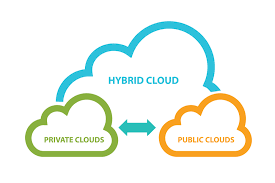
Pursuing a hybrid cloud strategy offers your business the combination of the customizability and security of a private cloud with the scalability and flexibility of a public cloud.
SNP Technologies Inc. has put together a list of best practices that organizations can leverage while designing and managing a hybrid cloud strategy for their business.
As a first step, it is crucial to perform a data center workload assessment and identify workloads for migration & modernization, focusing on:
Once the inventory and dependencies of data center workloads have been identified, the rationalization process helps design the hybrid cloud roadmap. Where:
Once the segregation of the workloads is completed, this information is used to build a hybrid cloud roadmap
As a part of the hybrid cloud strategy, it is essential to understand the current IP policy framework and establish a proper governance policy while expanding to public or private cloud environments. The governance framework focuses on Cloud workload operations and requirements, regulatory compliance, mission-critical applications, and (or) environments.
This focuses on creating document policies and guidelines for applications and data that are being migrated to a private or a public cloud environment. Performance and regulatory requirements, mission-critical environments, geographic restrictions, and strategic core business applications are just some of the things to keep in mind as you create these rules of engagement.
A hybrid Cloud solution opens your enterprise to new capabilities and new technologies, so you must assess how these vast resources can help you address the needs of your business without hindering the current functioning of your processes. This is a great opportunity to rethink your business processes and become more efficient as an IT organization.
The hybrid cloud offers opportunities to save your company money, whether by providing on-demand capacity and (or) performance or augmenting your current IT team with additional resources. Every future CAPEX expenditure for hardware should be scrutinized to see if a public or hybrid cloud solution would help reduce or eliminate those costs. You can transition your business from a CAPEX model to an OPEX model.
Hybrid clouds are very complex and require expertise for implementation, migration, and management across compliance, storage, networking, and virtualization. You could either train your in-house resources to build a hybrid cloud or rely on a trusted vendor or service provider to be part of your solution.
The implementation of your hybrid cloud solution is the key to building trust with your executive management, end-users, and customers, so it is not something to be done hastily. Test by migrating a few applications or workloads in your hybrid cloud and if successful, migrate additional workloads as you feel more comfortable and confident. The flexible nature of the hybrid cloud allows you to continually modify and improve your processes until you are satisfied.
 For more details information on Hybrid Cloud, contact an SNP representative.
Read more blogs on SNP's Hybrid Cloud solution:
Hybrid Networking: Agility for your Cloud Infrastructure
Private, Public, or Hybrid Cloud: Which one is right for you?
Simplify Cloud Security Across Hybrid & Multicloud with Azure Arc
Azure Arc enabled Kubernetes for Hybrid Cloud Management- Manage Everything and Anywhere
SNP’s Hybrid Cloud Adoption Framework for Azure
For more details information on Hybrid Cloud, contact an SNP representative.
Read more blogs on SNP's Hybrid Cloud solution:
Hybrid Networking: Agility for your Cloud Infrastructure
Private, Public, or Hybrid Cloud: Which one is right for you?
Simplify Cloud Security Across Hybrid & Multicloud with Azure Arc
Azure Arc enabled Kubernetes for Hybrid Cloud Management- Manage Everything and Anywhere
SNP’s Hybrid Cloud Adoption Framework for Azure